SAWA Project Impact Stories: Young Africans Turning Vision Into Change

Our Health Matters: Creating Space for Women in Media to Pause, Reflect and Connect
13/04/2026
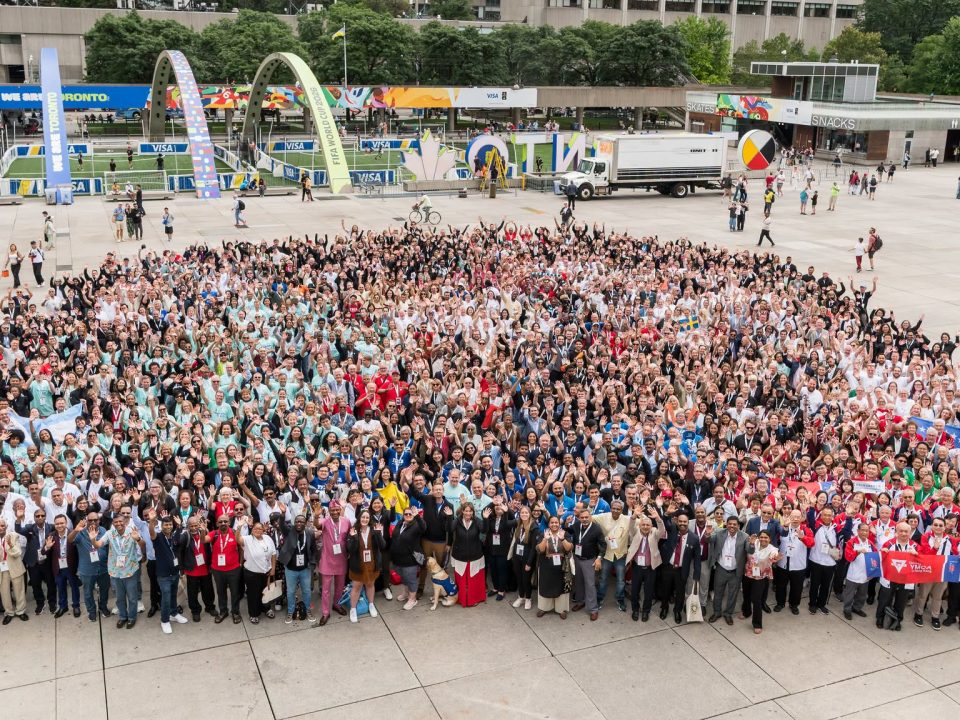
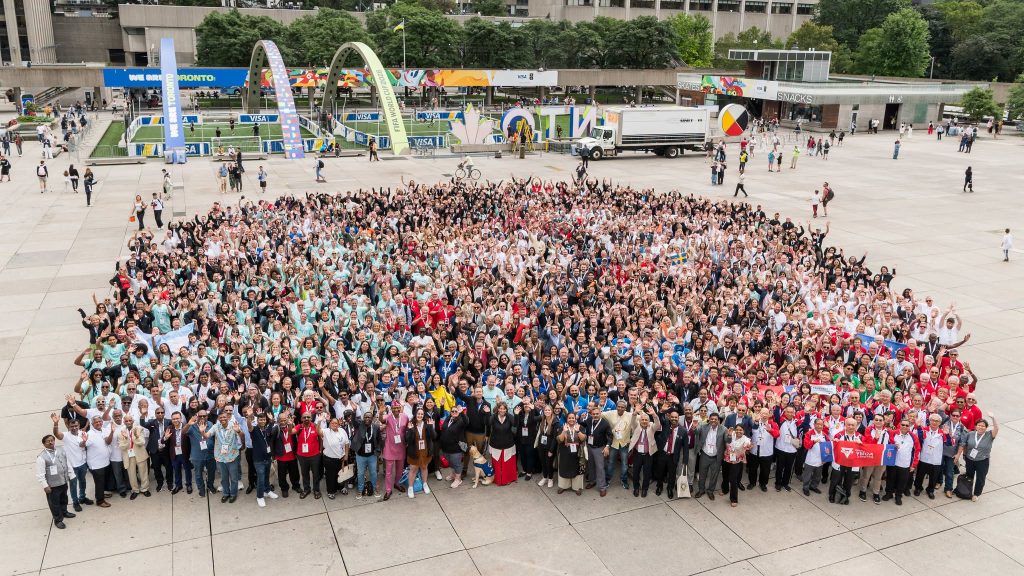
21st YMCA World Council 2026- Toronto
26/07/2026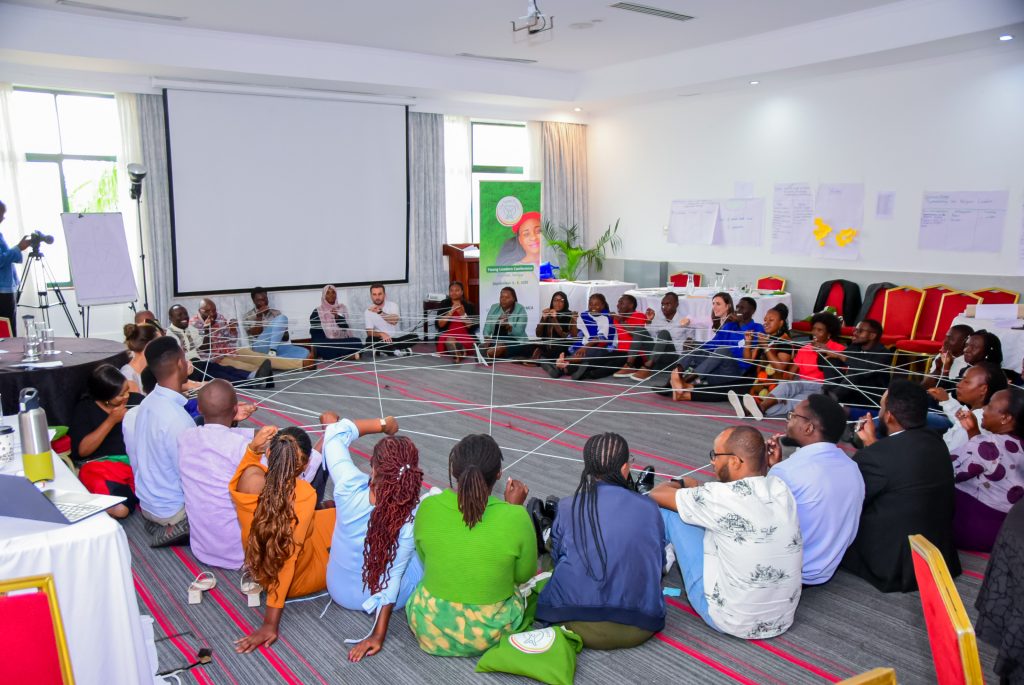
The SAWA Project — a collaborative initiative by the Africa Alliance of YMCAs, MCW Global and the Kofi Annan Foundation — equips young leaders across Eastern and Central Africa with seed funding, mentorship and advocacy support to tackle mental health challenges in their own communities. These practitioners delivered work that was quiet, determined and transformational.
These are their stories.
 Howard Bowa : ChatTherapy Africa (Malawi)
What if every young person in Africa could access mental health support, no matter where they live?
That is the question Howard from Malawi set out to answer. Through ChatTherapy Africa, he and his team built a digital platform that connects young people to mental health professionals and Psychological First Aid (PFA) resources — and then went further, walking directly into schools to meet students face to face.
ChatTherapy Africa did not just build a platform. The team co-created an entire PFA manual together with young people who had lived experience of mental health challenges, ensuring the content stayed grounded in real need, not theory. In doing so, they reached four countries and over 109 students with a resource that now lives beyond any one workshop or session.
"The SAWA Project has helped us bring our vision to life by giving us the knowledge, mentorship and tools necessary."
Four countries. 109+ students. One co-created PFA manual. And a growing community of youth who now know they do not have to face their struggles alone.
Halima Selemani : DENEYA Youth Resilience (Malawi)
They came with pencils and paper. They left with something harder to name, but easier to carry.
In three districts across Malawi, Halima and her team from DENEYA brought mental health education to young people through digital messaging, community sessions, and art therapy. Young people drew caterpillars becoming butterflies — their own transformation on the page.
Halima's approach was simple and profound: meet young people where they are, in their language, with their symbols, and trust that the healing follows. The sessions combined creative expression with psychoeducation, giving participants both an emotional outlet and the vocabulary to speak about what they were carrying.
And through it all, one life was pulled back from the edge.
That is not a statistic. That is everything.
 Ruth Nazzinda : Shining a Light on Lupus (Uganda)
Nazzinda picked up a camera and pointed it at the truth.
Her documentary, Shining a Light on Lupus, did not just tell a story — it opened a room. A room where patients, advocates, nutritionists and youth leaders sat down together and said: enough silence.
Lupus is a misunderstood autoimmune disease that disproportionately affects women and is often misdiagnosed, dismissed, or shrouded in stigma. In Uganda, those living with it have long faced isolation and misinformation. Ruth's documentary gave the disease a face — and gave communities a reason to gather.
One screening. One community dialogue. One fundraising campaign toward a lupus clinic in Kampala.
Because when storytelling meets advocacy, communities heal. Ruth's project is a reminder that sometimes the most powerful tool for public health is not a policy brief — it is a film, followed by an honest conversation.
 Mohamed Dahir Omar : The Bahdoon Initiative (Somalia)
In a country rebuilding from decades of conflict, Mohamed did not wait for systems to change. He built one.
Somalia carries a heavy weight — years of displacement, crisis, and loss have left deep psychological wounds in many communities. Yet mental health remains rarely spoken about, and the stigma surrounding it keeps many young Somalis from seeking the support they need.
Through the Bahdoon Initiative, Mohamed is meeting youth where they are — in communities, in classrooms, in conversations — teaching them that mental health is not weakness; it is wisdom.
His approach centres peer-led sessions and digital outreach across three districts, building a critical mass of young people who now have the language and the courage to say: I need support. These youth are not just recipients of a programme — they are being trained as advocates themselves, creating a ripple effect that no single facilitator could achieve alone.
Three districts. Digital outreach. Peer-led sessions. And a growing movement of young Somalis rewriting what it means to be strong.
 Beth Atieno Omondi : ACEs Prevention (Kenya)
She walked into a room of 40 traumatised children — and walked out having changed their lives.
She walked into a room of 40 traumatised children — and walked out having changed their lives.
Beth Atieno Omondi did not wait for the system to catch up. She trained, she showed up and she gave young people in Kenya the tools to heal from what they never chose to experience.
Adverse Childhood Experiences — abuse, loss, witnessing violence, household instability — cast long shadows over a child's mental health and life outcomes. Beth's programme worked with 40 adolescents aged 9–17 over three years, using three evidence-based pillars: psychoeducation to help young people understand what happened to them, coping skills to give them tools for the present, and empowerment to help them believe in their futures.
The work was structured but deeply human. In early sessions, participants drew or wrote about their experiences — art and storytelling as an outlet for pain that was hard to speak aloud. Later sessions introduced group therapy and resilience-building activities. And through it all, young people realised they were not alone.
The school director described it as one of a kind.
Three years. 40 adolescents. Countless breakthroughs. This is what SAWA looks like on the ground — quiet, determined, transformational work that does not make headlines but changes lives.
 Chuka Ajar : Breaking the Cycle of Menstrual Stigma (Sudan)
In Gidel, a remote community in the Nuba Mountains of Sudan, a girl died because she was laughed at.
In Gidel, a remote community in the Nuba Mountains of Sudan, a girl died because she was laughed at.
She had a period stain on her clothes at school. Boys mocked her. The shame became unbearable. Chuka Ajar knew this story. And she refused to let it be repeated.
Based in South Kordofan — a region marked by conflict, poverty, and deeply rooted cultural taboos — Chuka's project addresses what many overlook: the devastating link between menstrual stigma and girls' mental health. Without sanitary products, accurate information, or a community that treats menstruation with dignity, adolescent girls are missing school, isolating themselves, and carrying shame that quietly erodes their self-worth and psychological well-being.
Chuka's initiative provides essential sanitary pads alongside community health education, building a support network where women and girls can speak openly and honestly. It equips girls with supplies and knowledge, but more importantly, it changes the culture around them — fostering empathy in communities, and creating an environment where no girl is left to suffer alone.
When a girl can manage her period with dignity, she comes to school. When she comes to school, she has a future. This project understands that mental health and basic dignity are inseparable — and that the smallest interventions can break the most entrenched cycles.
Derrick Byamungu : Resilient Youth Initiative (Uganda)
Across Uganda, a generation of young people are learning a new vocabulary — the language of mental health.
Derrick Byamungu leads the Resilient Youth Initiative, a cross-country effort to improve mental health literacy and access to support for youth aged 10 to 24. In many communities, young people grow up with no words for what they are feeling, no structures to turn to, and a social environment where speaking about mental health invites judgment rather than help.
Derrick's initiative addresses this through three interconnected pillars: culturally tailored mental health education delivered in communities and on digital platforms; safe spaces for creative expression through art-based activities that foster peer connection and early support; and a simple but vital referral system that links young people with trained professionals and existing community services.
The work is not abstract. It is young people in Uganda sitting in circles, drawing their feelings, and discovering for the first time that they are not the only ones who have felt this way. It is a teenager who, after a session, approaches a counsellor for the first time. It is a community slowly learning that asking for help is not weakness — it is courage.
By amplifying youth voices and partnering with community groups, the Resilient Youth Initiative is reducing stigma one conversation at a time.
Taken together, these seven stories are not separate projects. They are a single answer — expressed in seven languages, seven communities, seven ways — to a question Africa can no longer afford to defer: What happens when young people are trusted to lead their own healing?
The answer, as Howard, Halima, Ruth, Mohamed, Beth, Chuka and Derrick have shown, is transformational.


Empowering young people across Africa through the YMCA movement — in body, mind, and spirit.
Quick Links
Get In Touch
-
AddressState House Crescent, State House Avenue, Nairobi, Kenya
-
PostalP. O. Box 60856 – 00200, Nairobi, Kenya